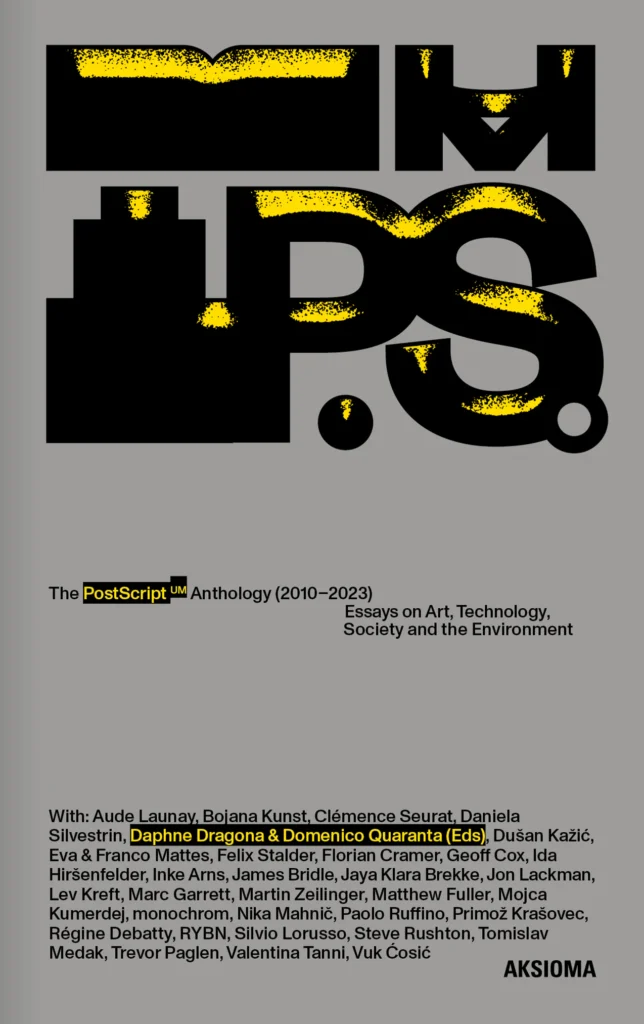
The PostScriptum Anthology
… AI, airports, algorithm, anthropocene, asset-based protocols, authorship, belonging, big data, bio art, blockchain, bot, calligraphy, capitalism, carbon footprint, CCTV, citizenship, classes, climate change, collaboration, computing infrastructure, cookies, criticism, crypto, cryptography, custumisation, DAOs, data mining, death of the author, debris, deep state, deep web, delegation society, digital capitalism, ecology, encryption, entreprecariat, fake/prank, finance, gender, gig economy, growth, hacking, hacktivism, hidden landscapes, human/nature, humor, hyperobjects, identity, images, incorporation, indie game, infrastructures, institutions, intelligence agencies, internet, labour, language, Luther Blissett, media culture, media event, memes, microplastics, military, names, nature, net art, new extractivism, NFTs, obfuscation, observing, offshoring, overidentification, ownership, peer-to-peer, performance, piracy, platform economy, politics, poor image, portrait, post-capitalism, post-growth, post-human, power, precarity, predictive algorithm, privacy, production, pseudoevent, radical geography, readymade, recycling, re-enactment, repurposing technologies, scale, secret operations, security, seduction, seeing, self-exploitation, software, speed, stateless machines, steganography, story/narrative, storytelling, surveillance, tax havens, temporality, theatre, utopia, visibility, waste, world building …
What can an anthology on art, technology, society and the environment tell us about the future? In a period of a prolonged generalised crisis, to what extent can critical texts and culture at large offer tools for thinking and acting? Overwhelmed with the feeling that we have no agency to affect what happens in the world nowadays, the only way to step forward might be to look back without losing our desire and urge to affect the present and shape the future.