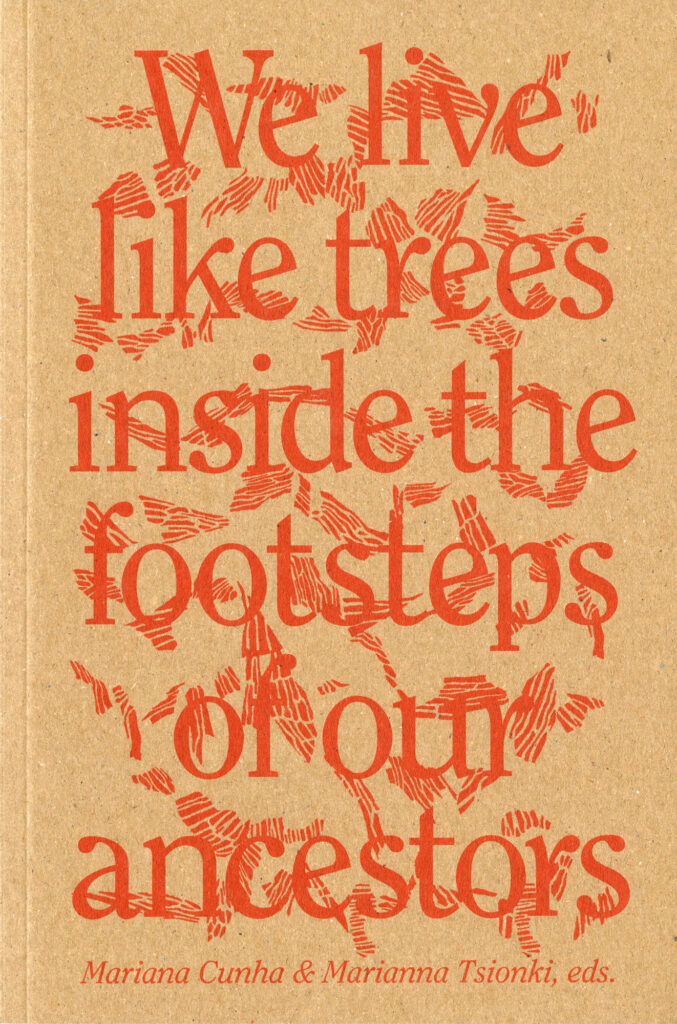
We live like trees inside the footsteps of our ancestors
Somewhere between canopy and root, memory and resistance, we live like trees inside the footsteps of our ancestors. This evocative phrase—originally coined by Vito Apüshana, a poet from the Wayuu people in the Guayira peninsula, northern Colombia—gives shape to a publication that gathers artistic and theoretical practices from across Latin America. It focuses practices that refuse colonial and Western-centered notions of nature, and instead grow through ecological sensibilities, situated pedagogies, and more-than-human knowledge systems.
Bringing together decolonial, ecocritical, and multispecies perspectives, the anthology traces how historical conditions, environmental struggles, and extractive economies shape the terrain of contemporary Latin American art. In the face of neoliberal dispossession and ecological collapse, it surfaces alternative ways of understanding land, life, and kinship—ways that challenge the entrenched separations between nature and culture, self and territory.
Featuring a range of contributions from artists, curators, and scholars—including reflective essays, critical writings, and conversations—We live like trees inside the footsteps of our ancestors offers radical visions of the environment. Each piece reimagines the relationship between humans and the more-than-human, unearthing epistemologies rooted in place, relation, and resistance. Together, they invite us to think with the Global South—not only about crisis, but about how to live otherwise.